
Storm Damage Restoration in Las Vegas, NV
When a monsoon rolls through the valley, our phones double. Most of those calls aren’t the dramatic flooding you see on the news. They’re a brown ring on a bedroom ceiling, a drip over the kitchen, or water that came in under the garage door. Small things people aren’t sure are worth a call. They are.


Call (702) 540-2219, any hour. A real person answers every call, and our goal is someone at your door within 60 minutes anywhere in the Las Vegas Valley. Elevate Restore has been handling storm damage here since 2010, and we’re an IICRC Certified Firm.
What we do, and what we don’t
We handle the inside: the water, the wet ceilings and walls, the drying and the cleanup. We don’t do roofs. We don’t tarp or fix them. If your roof needs work, we’ll tell you so on the phone and point you to a roofer we trust. If wind ever breaks a window or door, our crew can board it up the same night.
The first hour: before we get there
- Put a bucket under the drip. It keeps the water off your floors, which is where a small leak turns into a big bill.
- Move rugs, furniture and anything electrical away from the wet area.
- Take photos of the ceiling, the floor and anything that got wet, for your insurance company and for us.
- Call us at (702) 540-2219.
Roof leaks: why it won’t just dry out
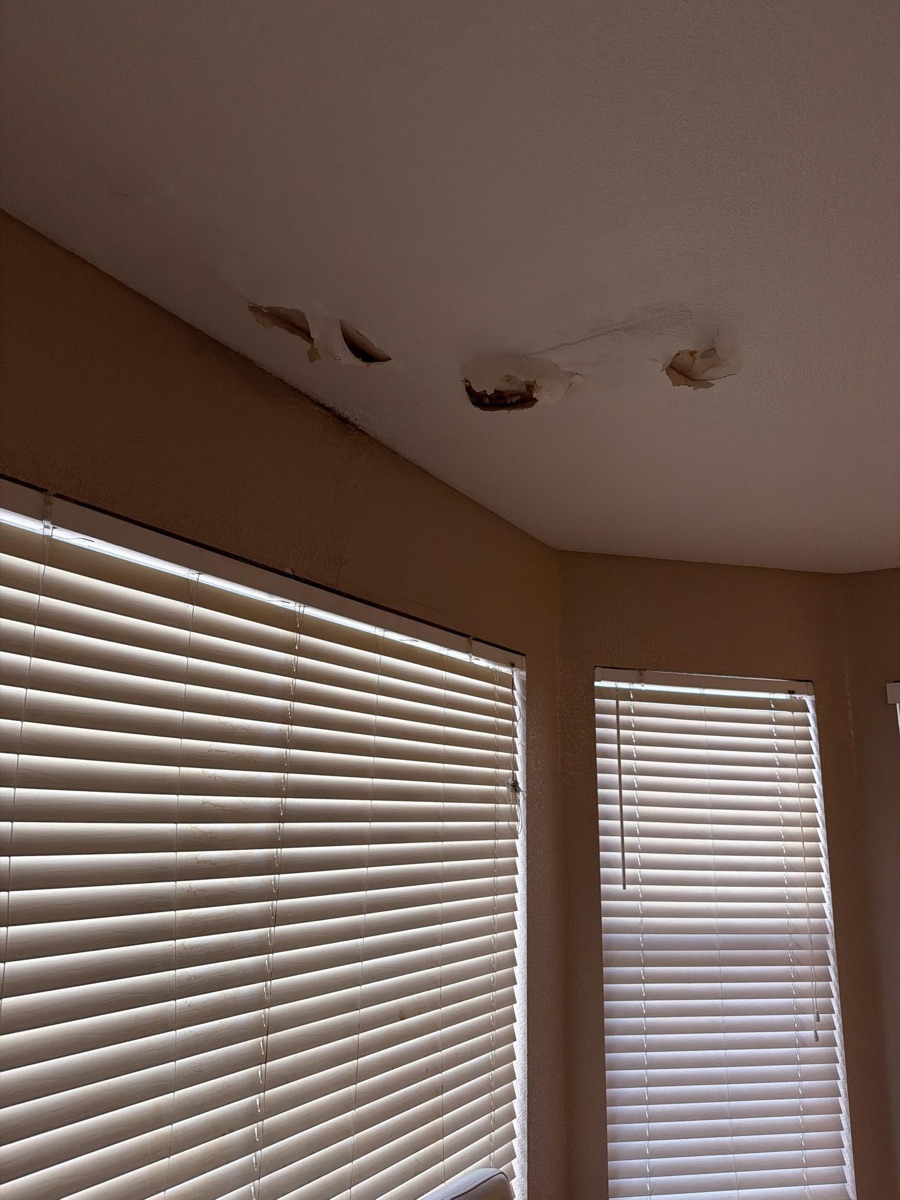
Everyone assumes that because it’s Las Vegas, a wet ceiling will dry on its own. The surface does. The back of the drywall, the insulation on top of it and the framing stay damp in the dark, and that’s all mold needs. We get those calls months later: “I have mold in my house.” It’s the same ceiling that leaked in the rain, and by then it’s a much bigger job.
So we find how far the water really went, which is almost always farther than the stain, open up the wet drywall so the inside can dry, and set up drying equipment. On a typical roof leak that’s a few days of equipment, not a construction project.
Flood water from outside is different
Water that comes in from outside, under a door, through the garage or in from the street, isn’t clean. We treat it as Category 3 (contaminated) water:
- Wet drywall comes out. How much depends on how high the water wicked up. A standard 2-foot cut usually takes care of it; sometimes it takes 4 feet.
- Carpet and pad come out. Some people will tell you flood-soaked carpet can be cleaned. We recommend removing it, since the water that soaked it wasn’t clean.
- Everything the water touched gets cleaned and disinfected before drying starts.
- Then we dry and check it with moisture meters until the readings show it’s dry.
Storm risks in the Las Vegas Valley
Most of the year, nothing here gets tested by rain. Then one storm tests everything at once.
- Monsoon season. Monsoon season here usually runs from late June to mid-September, and storms are most common in July and August. They usually build over the mountains around the valley and then move in.
- Flash floods. The heavy rain from these storms can cause flash floods that rush down washes that are dry the rest of the year. That’s the water that ends up under doors and in garages.
- Wind. Strong winds are most common here in spring and fall, and thunderstorm gusts sometimes cause damage, along with blowing dust and sand. If wind opens up your roof, call a roofer for the roof and call us for the inside. See wind damage cleanup.
- Hail. It isn’t common here, but it happens: it hailed in Summerlin on November 19, 2026. Hail can break skylights and windows and damage roofs, and that’s how water gets in.
- About 4 inches of rain a year. With so little rain, a roof or patio drain can go months without being tested, so a leak often shows up for the first time in one big storm.
If water got inside, call us. The sooner drying starts, the less has to come out.
What insurance usually covers after a storm
- Wind-driven rain through the roof has usually been covered on a homeowner’s policy: if wind opened the roof and rain came in behind it.
- Small leaks without clear wind damage are being treated more and more as maintenance, adjusters tell us. Every policy is different.
- Water that came in from outside at ground level is flood damage. A homeowner’s policy doesn’t cover flood. That takes a separate flood policy.
- FEMA help for homeowners only opens up after a federal disaster declaration for the county.
Call your insurance company, and call us either way. We document the loss with photos and moisture readings and work with your adjuster. If it isn’t covered, you get a written estimate up front, and financing is available. The insurance company isn’t our customer. You are.
Why Las Vegas calls us after a storm
- A real person answers every call. Not an AI agent, not a call center.
- You can reach the owner. Locally owned by Mike Mendoza, born and raised in Las Vegas.
- The same faces, year after year. Our team has been with us for a long time.
- Homes and businesses. From a single ceiling to a whole building.
For more detail, read Mike's post: what to do in the first hour after a storm.
Water spread through the house after a storm? See flood cleanup for homes.
What our customers say
“All of the staff and work crew at Elevate Restore have been very professional since day one. The communication is excellent and in a timely manner; they’ve answered the many questions I’ve had. I highly recommend this company for any restoration needs caused by fire, smoke or flood/water damage.” (Monday L., Google review)
“They were very quick to respond to an urgent water damage issue in my building, and were great at FaceTiming me (since I was on the East Coast) so I could see the situation in real time.” (Liz R., Google review)
Helpful guides: Flood cleanup for homes · Roof leak or flooding after a storm · Water leak in the ceiling: what to do · Water-damaged ceiling: what to do first · The Las Vegas flood of 1999
Frequently asked questions
Do you fix or tarp roofs?
No. We handle the water damage inside. For the roof, we’ll refer you to a roofer we trust.
Will a wet ceiling dry out on its own in Las Vegas?
The surface will. The inside of the ceiling, the insulation and the framing usually won’t, and that hidden moisture is what turns into mold later.
Is storm flooding covered by my homeowner’s insurance?
Usually not. Water that comes in from outside at ground level is flood damage, which needs a separate flood policy. A roof leak caused by wind usually is covered. Every policy is different.
Why do you treat flood water differently?
Water from outside is contaminated, so we treat it as Category 3: affected drywall comes out, we recommend removing the carpet and pad, and everything it touched is cleaned and disinfected before drying.
How long does drying take?
A typical roof leak takes a few days of drying equipment. We check moisture every day and don’t pull the equipment until the materials are dry.
Do you work with my insurance company?
Yes. We work with all insurance companies, bill them directly and document everything for your adjuster.
Mold showing up after an old leak? See mold remediation.
Storm damage at a business? See commercial storm damage restoration and commercial flood damage restoration.
Need help now?
Call (702) 540-2219. A live person answers every call, 24 hours a day, not an AI, and we will tell you exactly what happens next.