
A kitchen sink leak can cause more damage than most homeowners expect.
When a faucet, supply line, or plumbing connection breaks, water can spread quickly into the cabinets, walls, flooring, and nearby rooms. If the leak happens while the homeowner is away, the damage can become even more serious before anyone notices it.
What starts under the kitchen sink can move behind cabinets, into drywall, through shared walls, and even into nearby areas like the garage.
That is why fast water mitigation matters.
At Elevate Restore, we help Las Vegas homeowners respond quickly after unexpected water damage. Whether the loss comes from a broken kitchen faucet, failed supply line, appliance leak, water heater issue, or plumbing failure, our team focuses on assessing the damage, stabilizing the property, and beginning the drying process before the problem gets worse.
Why Kitchen Sink Leaks Can Be More Serious Than They Look
A kitchen sink is one of the most-used plumbing areas in the home. Faucets, shut-off valves, drain lines, supply lines, garbage disposals, and connections all sit inside or near the cabinet area.
When one of these parts fails, water can collect inside the cabinet before it becomes visible on the floor.
By the time a homeowner notices the leak, the water may have already affected:
- Sink base cabinets
- Cabinet backing and toe kicks
- Kitchen drywall
- Baseboards and trim
- Flooring near the sink
- Wall cavities behind the cabinets
- Adjacent garage walls
- Stored items under the sink
- Nearby rooms or shared wall areas
Cabinets are especially vulnerable because they can absorb water quickly. Once moisture gets into cabinet materials, swelling, staining, odors, and deterioration can happen if the area is not dried properly.
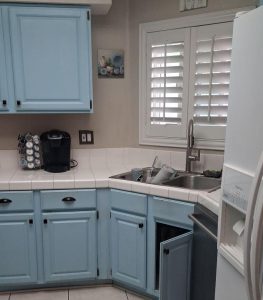
When a Leak Happens While You Are Away
Water damage is always stressful, but it can be worse when it happens while the homeowner is out of town.
If a kitchen sink faucet breaks and water continues running for hours, the damage can spread beyond the immediate sink area. Water may travel under the cabinets, into walls, through flooring gaps, or into connected areas like the garage.
This type of loss can feel overwhelming because the homeowner comes back to damage that has already had time to spread.
In these situations, the first step is not guessing what can be saved. The first step is professional assessment and stabilization.
Elevate Restore checks the affected areas, identifies how far the moisture traveled, places drying equipment, and helps create a plan for mitigation and restoration.
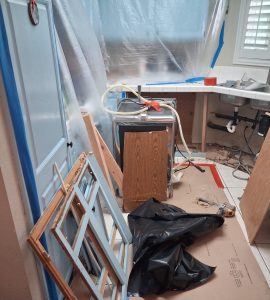
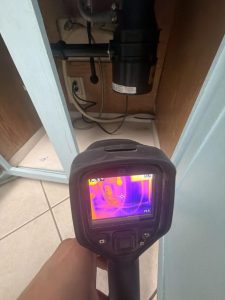
Why Cabinet Water Damage Needs Professional Attention
Kitchen cabinets are not always easy to dry.
Unlike open wall areas or flooring surfaces, cabinets have enclosed spaces, backing materials, toe kicks, and hidden corners where moisture can remain trapped. Even if the outside of the cabinet looks dry, the materials inside or behind the cabinet may still hold moisture.
Cabinet water damage may cause:
- Swelling
- Softened materials
- Warping
- Peeling finishes
- Musty odors
- Staining
- Damage to the cabinet base
- Moisture behind the wall
- Mold or microbial concerns if left untreated
Professional water mitigation helps determine whether cabinet materials can be dried or whether some materials need to be removed. This is important because drying the wrong way, or waiting too long, can lead to bigger repairs later.
How Water Can Travel From the Kitchen to the Garage
One detail homeowners often miss is that water damage does not always stay in the room where it started.
Many kitchens share walls with garages, laundry rooms, hallways, pantries, or utility spaces. When water enters drywall or travels through gaps in flooring and base materials, it can affect the other side of the wall.
That means a kitchen sink leak may also damage garage drywall or nearby structural materials.
This is why a full moisture inspection matters. If the kitchen is checked but the garage side is ignored, hidden water damage may be missed.
A professional mitigation team looks beyond the obvious area and checks where the water may have traveled.
What Water Mitigation Means After a Kitchen Sink Leak
Water mitigation is the process of stopping damage from getting worse after a water loss.
It is not just cleanup. It is a structured response that helps control moisture, protect the property, and prepare the affected areas for restoration.
After a kitchen sink faucet leak, water mitigation may include:
- Inspecting the kitchen and surrounding areas
- Checking cabinets, drywall, flooring, and adjacent rooms
- Identifying moisture behind walls or cabinets
- Extracting standing water if needed
- Removing damaged materials when necessary
- Placing air movers and dehumidifiers
- Monitoring moisture levels
- Documenting the affected areas
- Helping guide the next steps for repairs
The goal is to stabilize the property quickly and reduce the chance of additional damage.
Why Drying Equipment Matters
A broken faucet leak cannot always be handled with towels and household fans.
Surface water may be removed, but moisture can remain behind cabinets, inside drywall, or along shared walls. Professional drying equipment helps move air, control humidity, and support the drying of affected materials.
Drying equipment may include air movers, dehumidifiers, moisture meters, and other tools depending on the damage.
The most important part is monitoring. Water mitigation is not just placing equipment and walking away. The affected areas should be checked to confirm whether the materials are drying properly.
That helps prevent moisture from sitting in hidden areas.
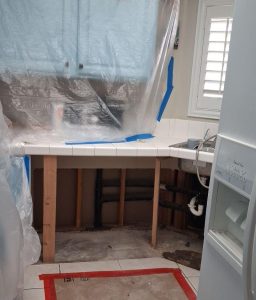
Signs You Need Water Mitigation After a Kitchen Sink Leak
You may need professional water mitigation if you notice:
- Water under the kitchen sink
- Wet or swollen cabinets
- Damp drywall near the kitchen
- Water spreading into nearby rooms
- Damage on the garage side of the wall
- Soft baseboards or trim
- Musty odors
- Peeling cabinet finishes
- Wet flooring near the sink
- Staining or bubbling paint
- A leak that happened while you were away
Even if the faucet has been repaired, the water damage may still need attention.
Stopping the source is only the first step. The affected materials still need to be inspected and dried properly.
Why Fast Response Helps Reduce Damage
The longer water sits, the more damage it can cause.
Cabinets can swell. Drywall can soften. Paint can bubble. Base materials can deteriorate. Moisture can spread into nearby rooms or wall cavities. If the area is not dried correctly, odors and mold concerns may develop.
Fast mitigation helps reduce the scope of damage and gives homeowners a clearer path forward.
Instead of wondering whether the cabinets are dry or whether the garage wall was affected, a professional team can inspect the area and create a plan.
Helping Las Vegas Homeowners After Kitchen Water Damage
A kitchen is one of the most important areas of the home. When water damage affects the cabinets, walls, or surrounding rooms, it disrupts daily life quickly.
At Elevate Restore, we understand that water damage is not just about the materials. It affects your schedule, your comfort, and your peace of mind.
Our team helps Las Vegas homeowners respond quickly with professional water mitigation, equipment placement, moisture monitoring, and clear communication throughout the process.
Whether the water damage comes from a broken faucet, failed supply line, dishwasher leak, refrigerator line, garbage disposal, or plumbing failure, our goal is to stabilize the property and help you move forward.
Call Elevate Restore for Kitchen Water Damage in Las Vegas
If a kitchen sink faucet leak has damaged your cabinets, drywall, flooring, or nearby garage area, do not wait for the problem to get worse.
Elevate Restore provides professional water mitigation services in Las Vegas and surrounding areas. Our team can assess the damage, place drying equipment, stabilize the affected areas, and help guide the restoration process.
Call Elevate Restore today at (725) 227-6935 for water mitigation in Las Vegas.