
When a fire hits a business, the fire department’s job ends when the fire is out. Yours is just starting. There’s water from the hoses or the sprinklers, smoke residue on the surfaces, and maybe broken windows or doors. And everyone wants to know the same thing: when can we open again?
We’ve been cleaning up after fires in the Las Vegas Valley since 2010. Here’s what a commercial fire job really looks like, the two ways it usually goes, and where owners lose time.
Our last commercial fire: open again the same day
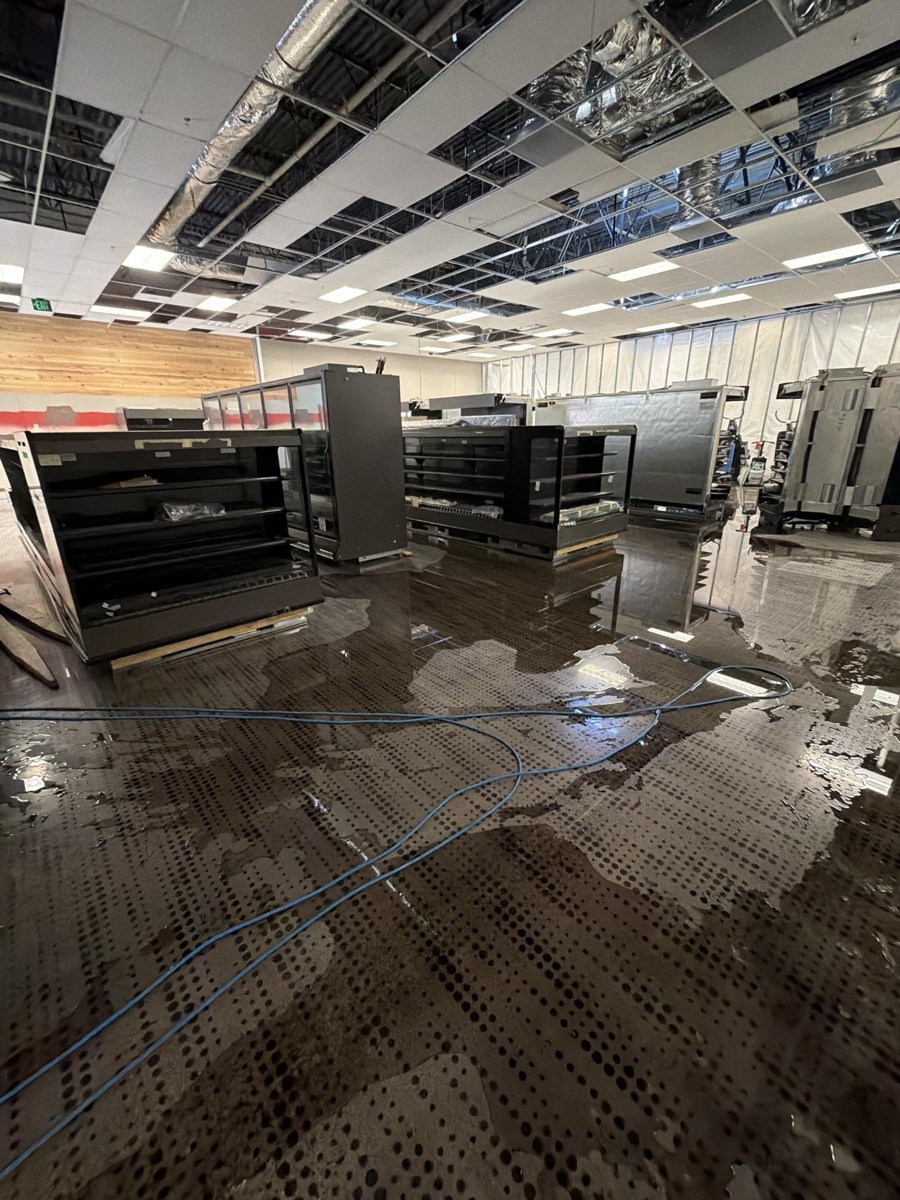
In April 2026 we had a small commercial fire at a big-box store on the northwest side of town. The store was being remodeled, and a fire started in the construction area at about 11 in the morning. The fire itself stayed small, but the fire sprinklers went off and put water across about a quarter of the store.
Our first people were on site by about 11:30 to 11:45, and the rest of the crew followed. Here’s what we did:
- Extracted the sprinkler water. We got lucky: no carpet, just hard floors.
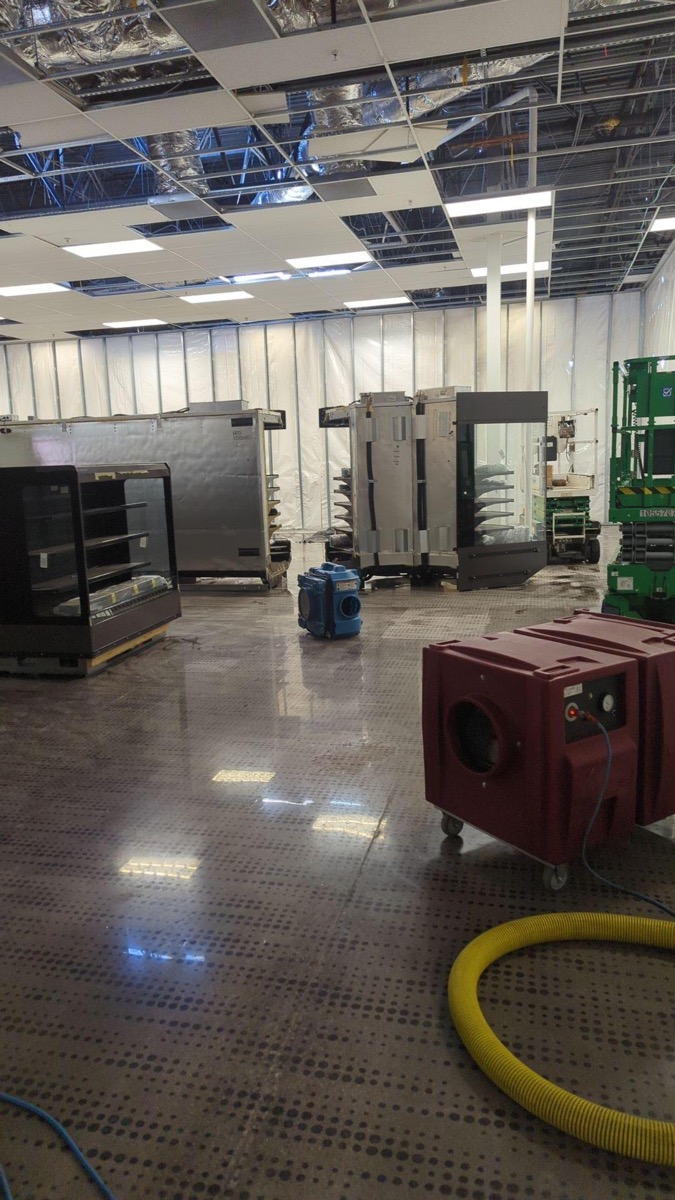
- Dealt with the smoke smell. The construction area was already walled off, so most of the smoke stayed there. We set up air scrubbers with charcoal filters. The smell didn’t vanish right away, but it faded quickly.
- Brought everyone. We sent all of our employees and brought in extra labor from people we work with.
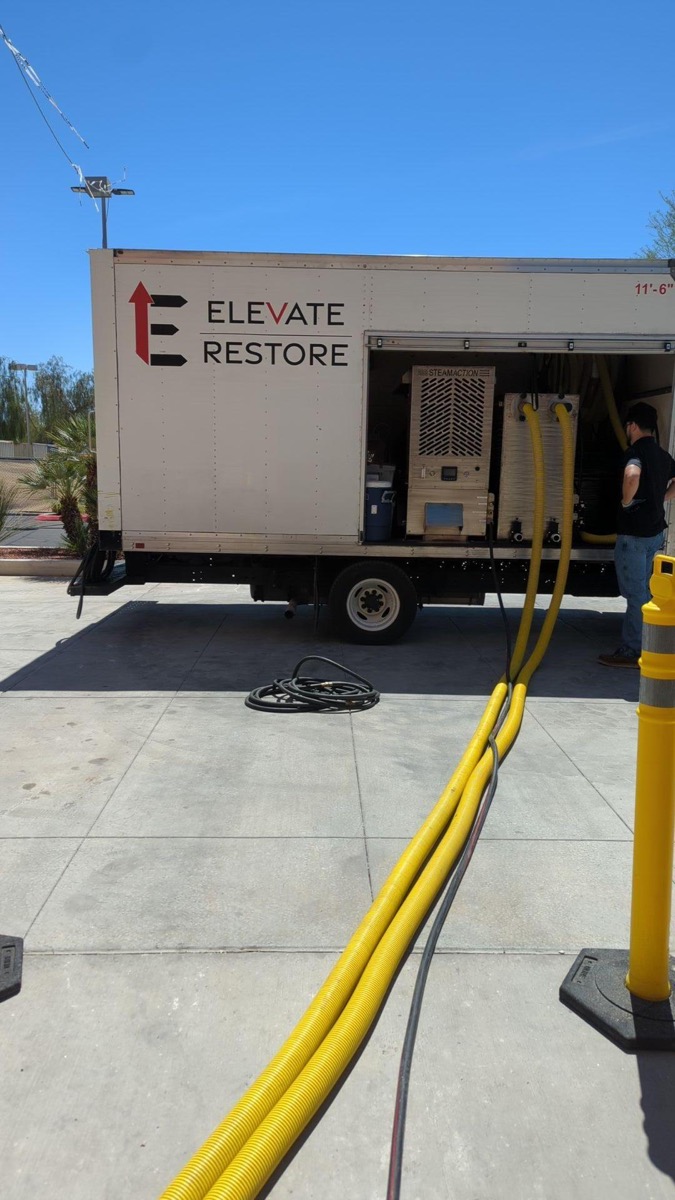
When we got there, store management expected to be closed for the rest of the day, maybe a couple of days. The store was open again by 5:30 that evening. The cleanup cost far less than a few days of being closed would have.
That job went fast for one reason: there was no fire investigation. Many commercial fires go differently.
The other kind of fire job: hurry up and wait
A fire is an emergency, but on a lot of commercial fires, day one is short. Here’s how it usually goes:
- The fire department puts out the fire.
- We board up and secure the building. That means windows, doors and openings, so weather, theft and squatters stay out. On day one, that’s mostly all that can happen.
- The investigation comes first. The fire investigator does their assessment. Sometimes the county does a damage assessment too. If there will be an insurance claim, the insurance company may send its own inspector. Until they’re done, the building is treated a lot like a crime scene. Nobody cleans anything.
- Then the cleanup starts. That can be a few days later, a week, or two weeks, depending on who’s involved.
That surprises a lot of owners. With a water loss, we start drying the first day. With a fire, it’s often hurry up and wait. What you can control is having the board-up done right away and your restoration company lined up, so the work starts the day the building is released.
A live person answers our line 24 hours a day, and our goal is to have a project manager or lead technician on site within an hour anywhere in the Las Vegas Valley.
Fire jobs are usually water jobs too
Hose water and sprinkler water often do as much damage as the fire. Sprinklers keep running until someone shuts them off, and the water spreads past the fire area into drywall, flooring and anything stored low. That water can’t wait for the investigation. Getting it out and drying the building is our water damage work, and it starts as soon as we’re allowed in.
What the cleanup includes
Once the building is released:
- Documentation first. Photos, readings and a written scope of what’s damaged and what can be cleaned. That record is what the billing is built on, whether the job is billed on time and materials or as an Xactimate estimate (the pricing software most insurance carriers use).
- Contents. Smoke travels into rooms the fire never touched. Inventory, files, furniture and equipment that can be cleaned are packed out, inventoried, cleaned and stored, then brought back when the building is ready. We carry bailee’s coverage, which insures your contents while they’re in our care.
- Demolition of what can’t be saved, such as burned or soaked drywall, insulation and ceiling tiles.
- Cleaning the structure that remains: walls, framing, ductwork and hard surfaces. The method depends on the type of residue.
- Smoke odor removal, with air scrubbers and other equipment, so the smoke smell doesn’t come back once the HVAC runs again.
We do mitigation and cleanup only. We don’t do the rebuild. When the building is clean, dry and documented, the rebuild goes to a contractor. If you need one, we can point you to one.
What does a commercial fire cleanup cost, and how is it billed?
It depends on how big the fire was, how big the building is, and what’s inside. A small smoke and fire job can run around $10,000 to $20,000. A large fire in a big building can run into the millions.
Most larger commercial jobs are billed on time and materials. If you’re paying out of pocket, it’s time and materials. Once an insurance company is involved, it’s their choice: time and materials, or an Xactimate estimate. We work either way.
On large commercial losses, a not-to-exceed figure is often set early. It caps what the first phase of work can cost while the full extent of the damage becomes clear. Estimates can change once walls are opened and hidden damage shows up. We’d rather tell you that on day one than surprise you later.
Who you’ll deal with, and what slows a job down
On most commercial fires, we work with the property manager or building owner, the business owner, and the insurance adjuster.
Two things slow these jobs down most:
- The fire investigation. It matters when it’s needed, and we wait for it like everyone else.
- Waiting on the adjuster’s approval. But a business needs to stay in business, and every day closed costs money.
When there’s no investigation and the owner just needs to get open, like the store above, we work directly with management and things move fast.
The most common mistake: shopping for the cheapest bid
The mistake we see most often is an owner who stops to collect bids and goes with the cheapest price, even when the claim is going through their insurance.
The cheapest company isn’t always the fastest, and for a business, speed is the whole point. Every day you’re closed is a day you’re not making money.
Most of the time your insurance company will be involved, and almost every restoration company can work with your insurance company and bill them. So don’t lose days collecting bids. Pick the company you feel most comfortable with, and get the mitigation started so you can get back to business.
If you want help deciding, here’s our guide on how to choose a restoration company.
Questions we hear after a commercial fire
How fast can someone be on site?
Our goal is a project manager or lead technician on site within an hour anywhere in the Las Vegas Valley, 24/7.
Why can’t you start cleaning right away?
If there’s a fire investigation, nothing gets cleaned until the investigator, and sometimes the county or the insurance company’s inspector, are done. We can board up and secure the building right away, and remove sprinkler or hose water as soon as we’re allowed in.
Do you work with my insurance company?
Yes. We work with all insurance providers, bill the insurer directly, document the loss in whatever format your insurance company prefers (time and materials or Xactimate), and keep you informed throughout.
Will you rebuild after the cleanup?
No. We handle the emergency work, cleanup and contents. The rebuild goes to a contractor, and we can refer you to one.
What happens to our inventory and equipment?
Items that can be cleaned are packed out, inventoried, cleaned and stored, then returned when the building is ready. They’re covered by our bailee’s insurance while in our care.
What if we’re paying out of pocket?
Commercial work that isn’t going through insurance is priced on a time-and-materials basis from our commercial price list. Financing through outside lenders is available.
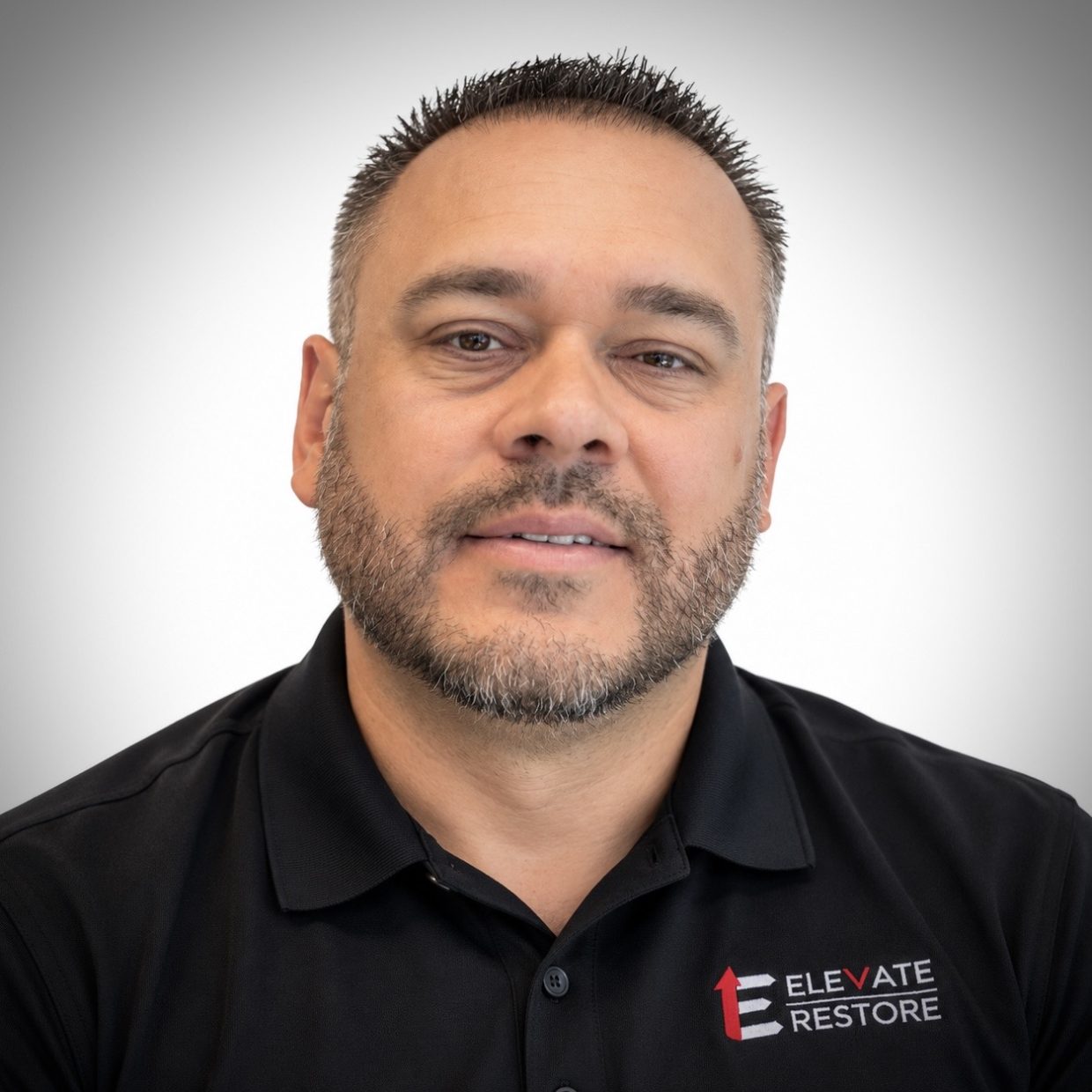
Written by Mike Mendoza, owner of Elevate Restore. Mike started the company in 2010. Elevate Restore is an IICRC Certified Firm based in North Las Vegas, handling fire, smoke and water damage cleanup for businesses across the Las Vegas Valley. Call (702) 540-2219, day or night. Updated November 2026.