

People are surprised to find mold in Las Vegas. It’s a desert, after all. But mold doesn’t need humid air. It needs water, and homes here get plenty of it from slow leaks under sinks, water heaters, AC drain lines, roof leaks after a monsoon storm, and broken pipes inside walls.
If you’ve found dark spots on a wall, ceiling or under a cabinet, here’s how to think about it.
“Black mold” is a color, not a diagnosis
“Black mold” usually means Stachybotrys chartarum, a greenish-black mold that grows on materials that stay wet, like drywall and ceiling tiles. But many molds look dark, and you can’t tell which kind it is by looking. The CDC and EPA give the same advice for all of them: don’t worry about the type, deal with the water and remove the mold.
The first step is always the water
Mold comes back if the water keeps coming. Before anything else, find out why that spot is wet. Look for a leak above or behind it, a sweating pipe, or a drain line that’s backing up. Fix the source (or have a plumber do it) first. Wet materials should be dried within 24 to 48 hours to keep mold from starting.
What you can clean yourself
The EPA says that if the moldy area is less than about 10 square feet (roughly a 3-foot by 3-foot patch), you can usually handle it yourself:
- Wear gloves, goggles and an N-95 mask.
- Scrub hard surfaces (tile, tub, sealed counters) with detergent and water, then dry them completely.
- Throw away porous things that are moldy, like ceiling tiles, carpet pad or cardboard. They usually can’t be cleaned.
- Never mix bleach with ammonia or other cleaners. The fumes are toxic.
- Painting or caulking over mold doesn’t fix it. It grows back under the paint.
When to call for mold remediation
Call a professional when:
- The patch is bigger than about 10 square feet, or you see it in more than one room.
- It’s inside walls, under flooring or in the attic.
- It came from sewage or dirty water.
- It keeps coming back after you clean it.
- You smell a musty odor but can’t find the mold.
- Someone in the home has asthma, allergies or a weak immune system.
- You’re selling the home or filing an insurance claim and need it documented.
Professional mold remediation means sealing off the area so spores don’t spread, running air scrubbers, cutting out and removing moldy materials, cleaning what can be saved, and drying everything out. Removing too much drywall without containment can spread spores through the rest of the house, which is why bigger jobs shouldn’t be DIY.
A recent mold job in Las Vegas
Insurance rarely pays for mold work, but here’s one time it did. In September 2026 a Las Vegas homeowner called us about mold in two spots: about 12 square feet of exposed subfloor in an upstairs bathroom, and the kitchen and laundry room area downstairs. We set up containment in both areas and covered the vents and fan openings so spores wouldn’t travel through the house. Then we sanded and wire-brushed the mold off the plywood subfloor, treated it, and cut out the affected wall sections.
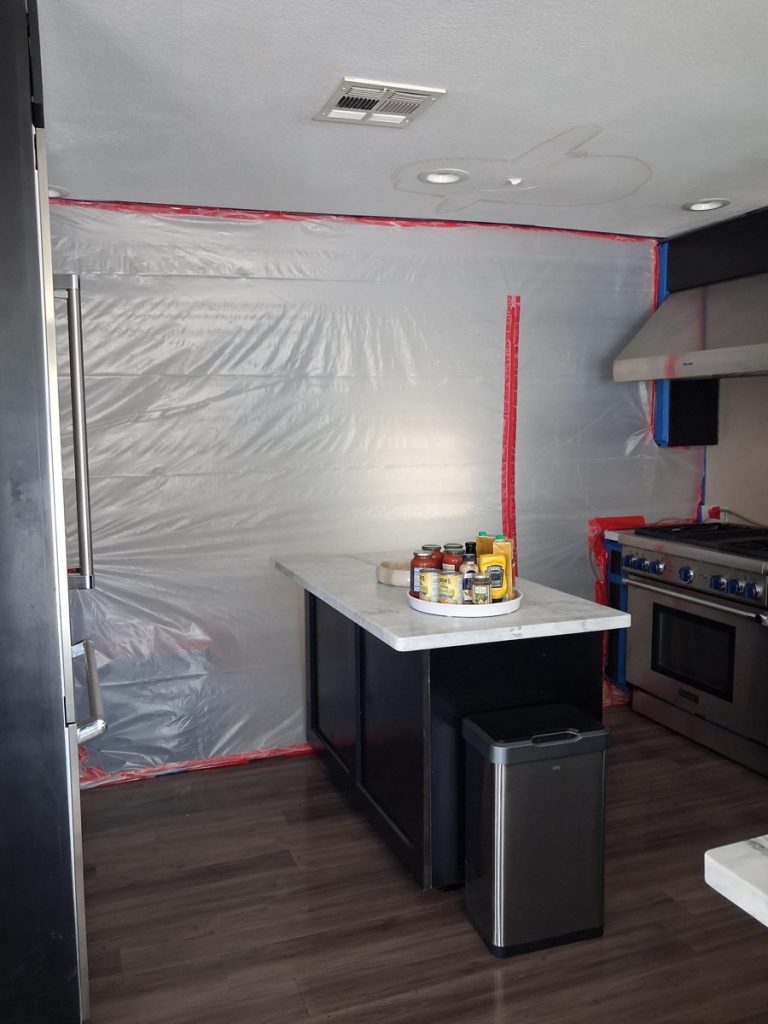
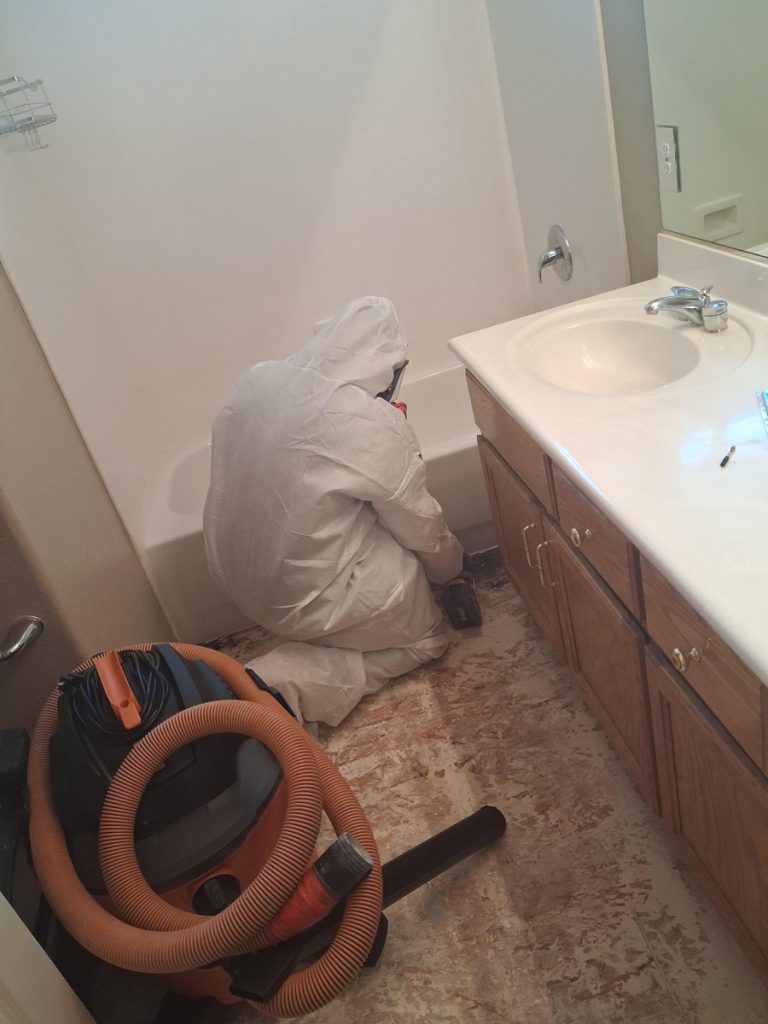
Four days after we started, we did a final wipe-down, took the containment down and pulled our equipment. His policy had mold coverage, and his insurance helped pay for the work. When he asked who could put things back, we referred him to a rebuild contractor.
What we do and don’t do
We find the moisture, set up containment, remove the moldy materials and dry the area. We don’t rebuild. When the remediation is done, we can refer you to contractors for the drywall and finish work. We price insurance jobs in Xactimate, bill your insurer directly and keep you informed. For self-pay jobs we quote up front.
Found mold? Call (702) 540-2219, 24/7, or contact us.
Dealing with mold in Las Vegas? See our mold remediation in Las Vegas page or our Las Vegas water, fire and mold restoration page, or call (702) 540-2219.